Conway Fishing Charters: Saltwater Trips Beyond the Waccamaw
Why Waccamaw River Experience Doesn't Translate to Saltwater Fishing
Many Conway anglers assume their experience on the Waccamaw River translates directly to saltwater fishing — that knowing how to read river current and structure means a Grand Strand charter will fish the same way. What they discover on the water is that the species, tackle, and tactics differ enough that even experienced freshwater anglers benefit from a captain who works saltwater full-time. Silver Tuna Sport Fishing operates from Murrells Inlet, a 25-minute drive from Conway via US-501 and US-17, putting Conway residents on inshore redfish flats and nearshore king mackerel ledges that no amount of river experience prepares you for.
The Waccamaw flows past Conway and eventually joins the Pee Dee and Black rivers in Winyah Bay south of Murrells Inlet, but the saltwater system upstream of that confluence produces a different set of target species across a different year. Redfish, flounder, and trout inshore; king mackerel, Spanish mackerel, and cobia nearshore. Our captain has worked these specific waters for over a decade.
Conway guests most often book the ¾-day charter — six hours gives enough time to fish inshore marsh structure and run nearshore ledges without committing the full day to the coast.
What Sets Murrells Inlet Charters Apart for Conway Anglers
The standard charter operation along the South Carolina coast runs the same route to the same spots regardless of tide, wind, or what baitfish are doing that week. Our approach with Conway-area guests is structured around active decision-making throughout the day — where to fish, what species to target, when to move — based on conditions rather than a fixed schedule.
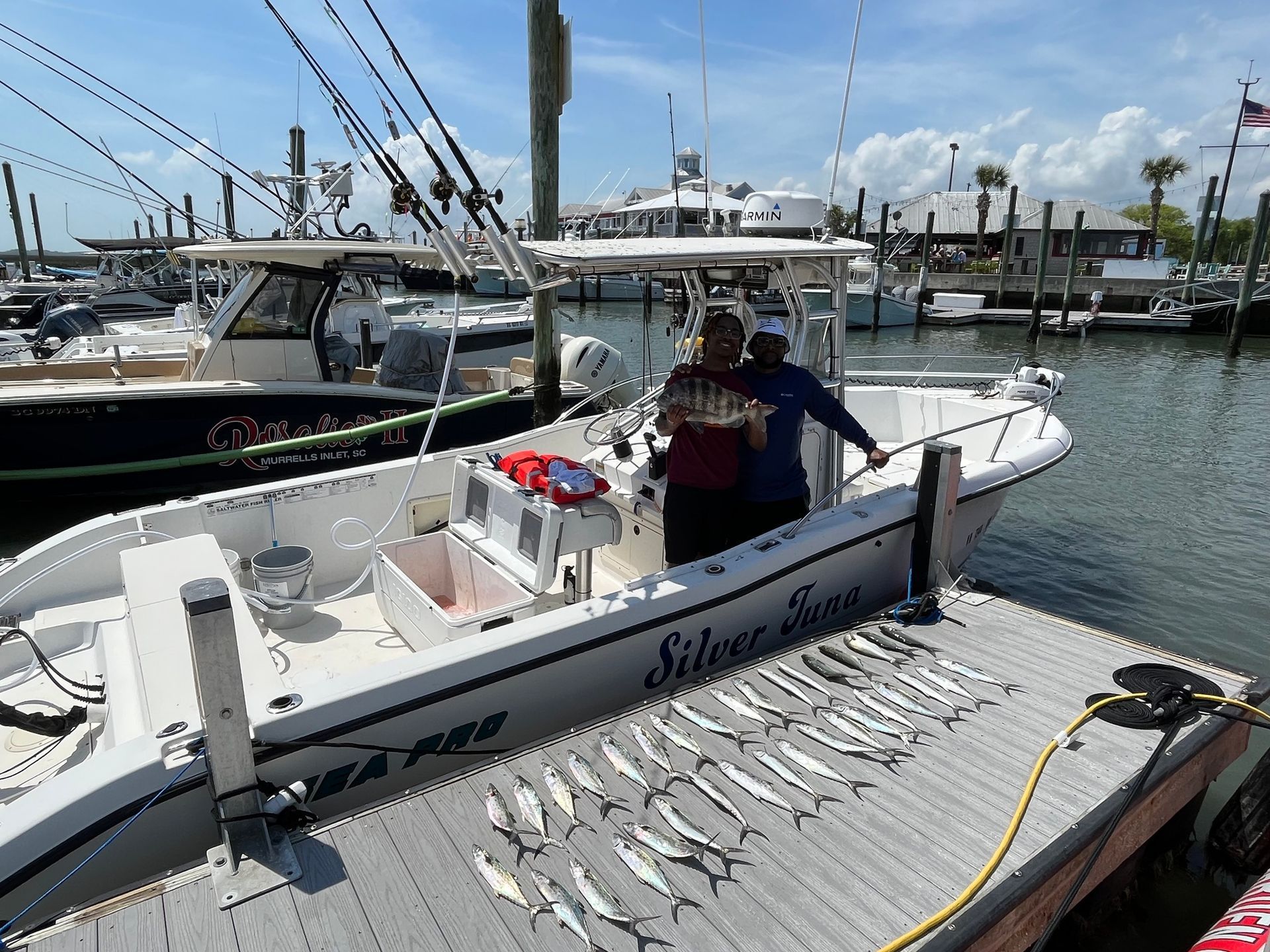
- Conway anglers land redfish, flounder, and trout from inshore flats their Waccamaw River experience didn't prepare them for
- Groups reach productive nearshore structure in under 30 minutes from the dock, leaving full hours for actual fishing rather than transit
- The captain repositions the boat when a spot goes cold rather than holding station — Conway groups don't sit on dead water
- Mid-July trips stay productive through the afternoon because the air-conditioned cabin extends usable on-water time
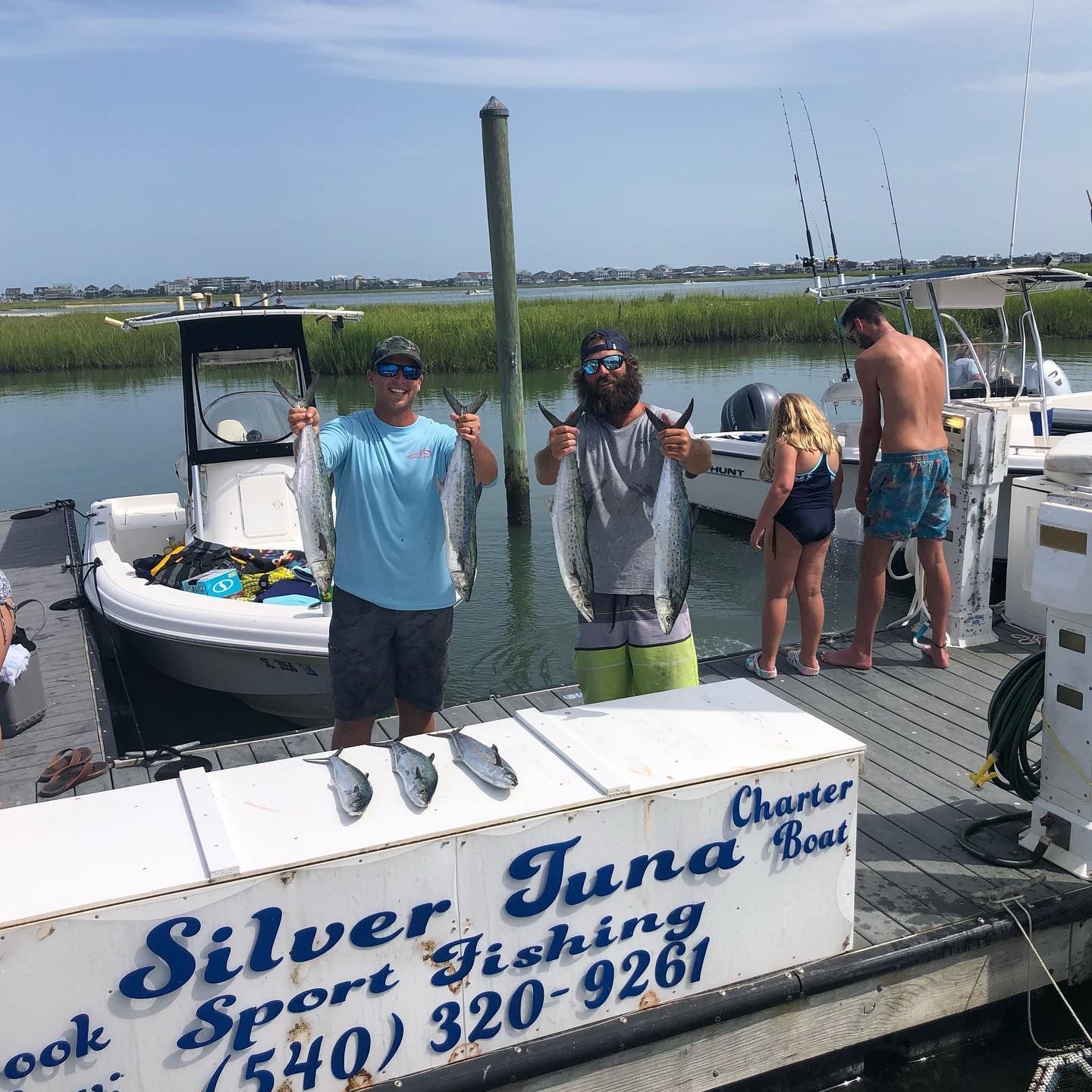
- First-time saltwater anglers from Conway leave with photographable catches because tackle and approach get matched to skill level
Conway anglers ready for the saltwater step beyond the river have a charter built around real conditions. Book your trip and let captain knowledge put you on fish the Waccamaw doesn't hold.
Choosing the Right Saltwater Charter for Your Conway Group
Selecting a fishing charter for a Conway group means looking past surface factors like marina location and evaluating the operational specifics that determine whether the day produces fish. The questions worth asking surface quickly once you know what separates a working captain's operation from a high-volume tourist booking.
- Captain experience: over a decade on Grand Strand inshore and nearshore structure — the metric that separates working captains from seasonal hires
- Charter options: 4-hour, 6-hour, and 8-hour trips — Conway groups select based on schedule, not the operator's preference
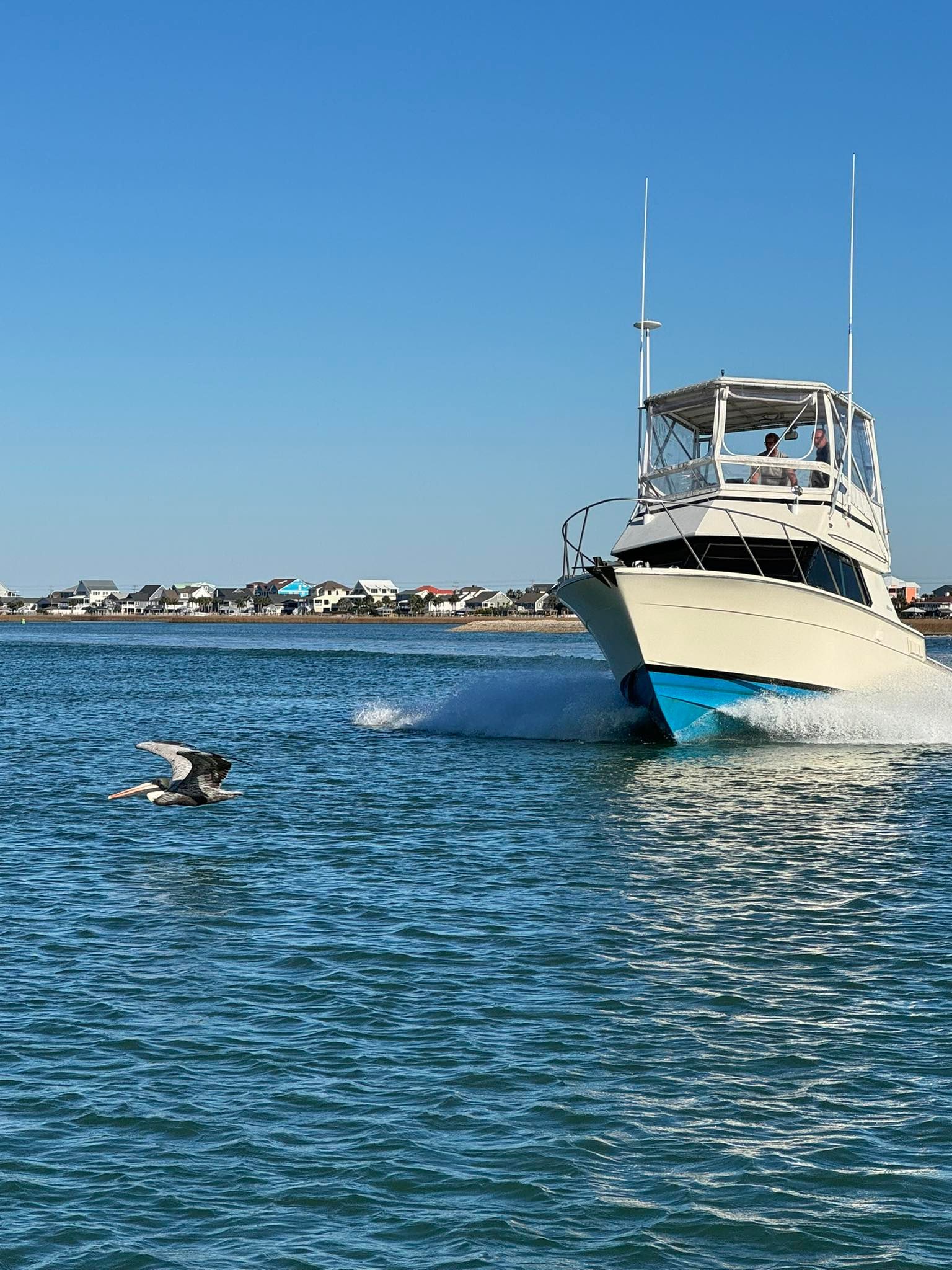
- Boat: 32-foot Hatteras with air conditioning and on-board bathroom — climate control is the difference between productive summer trips and shortened ones
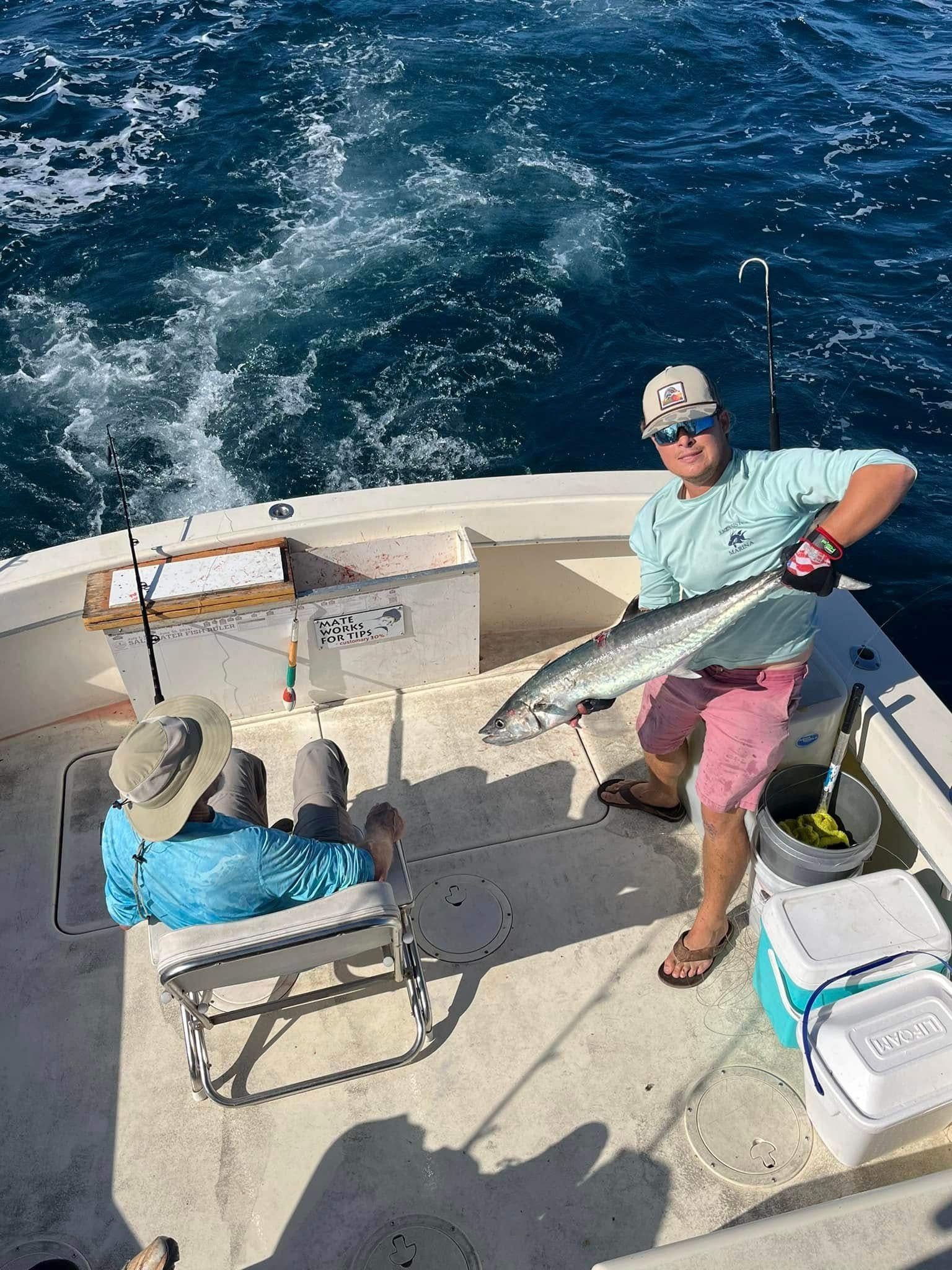
- Tackle: light spinning for inshore species, conventional gear for nearshore king mackerel — single-method operations miss species the day actually offers
- Group size: limited capacity per trip — productive rod space matters more for catch rates than the party-boat headcount
Conway anglers willing to ask the right questions before booking get clear answers from our captain. Reach out to reserve a date that fits your Conway schedule and book a charter that delivers on the drive to the coast.