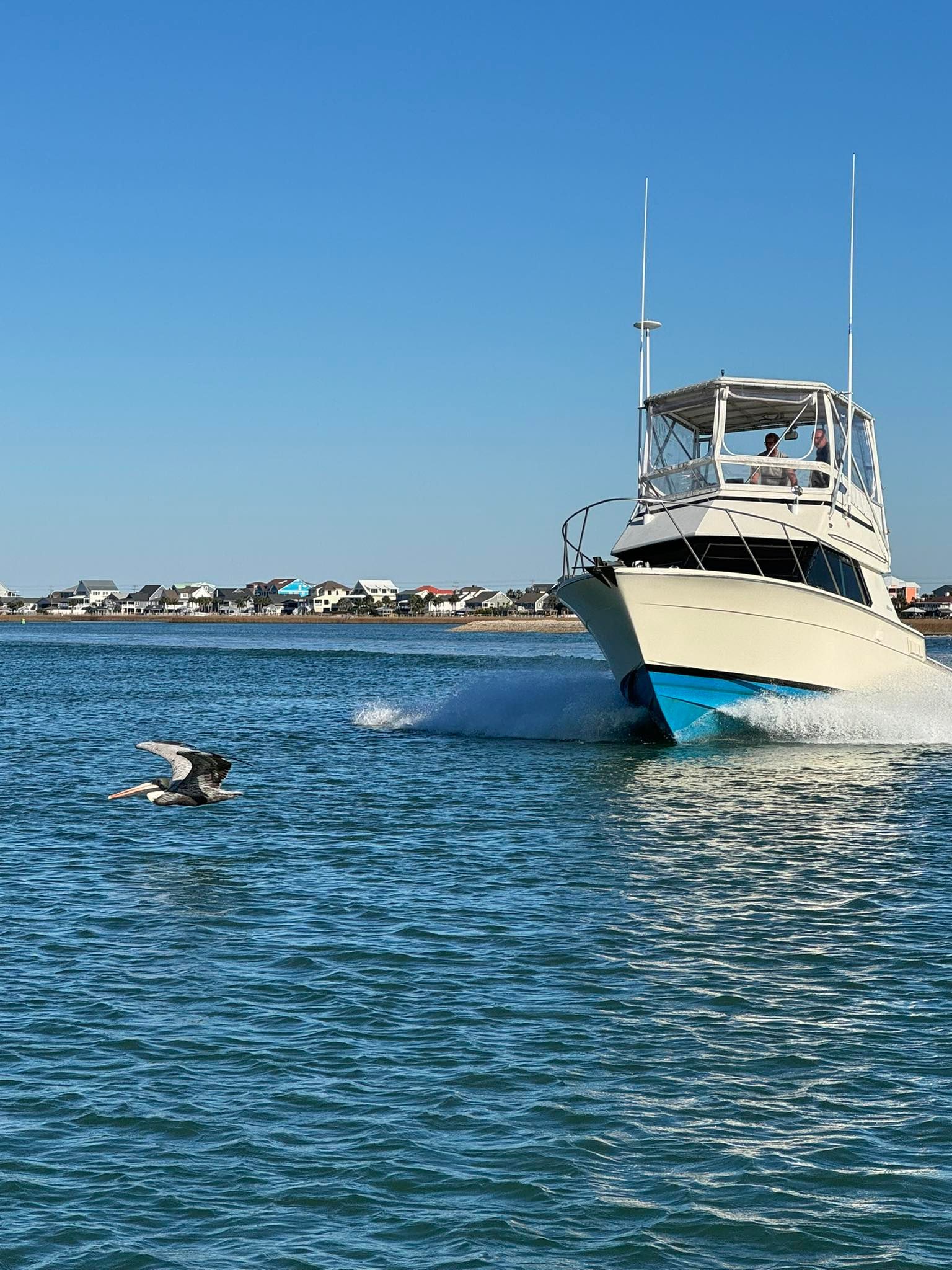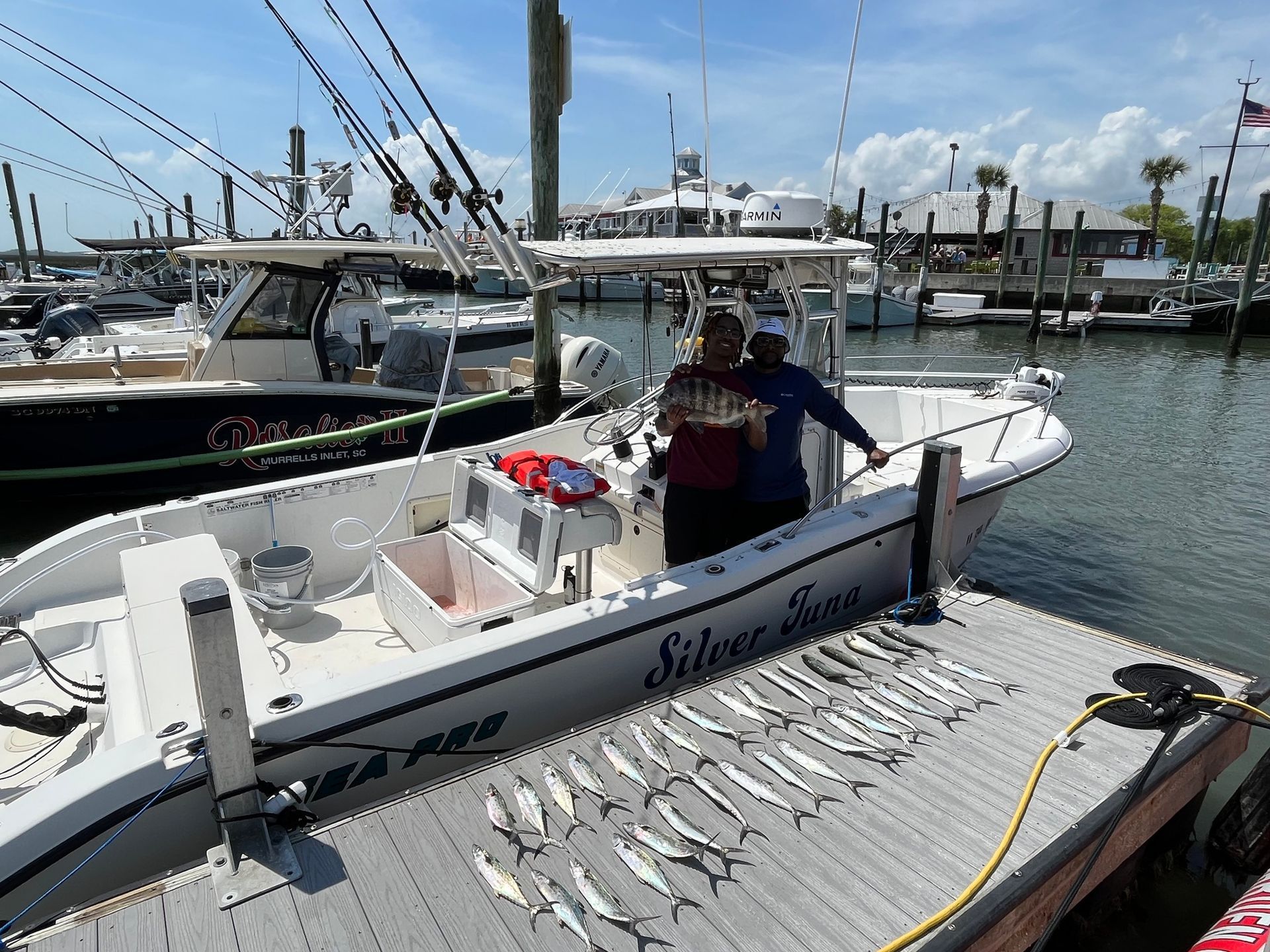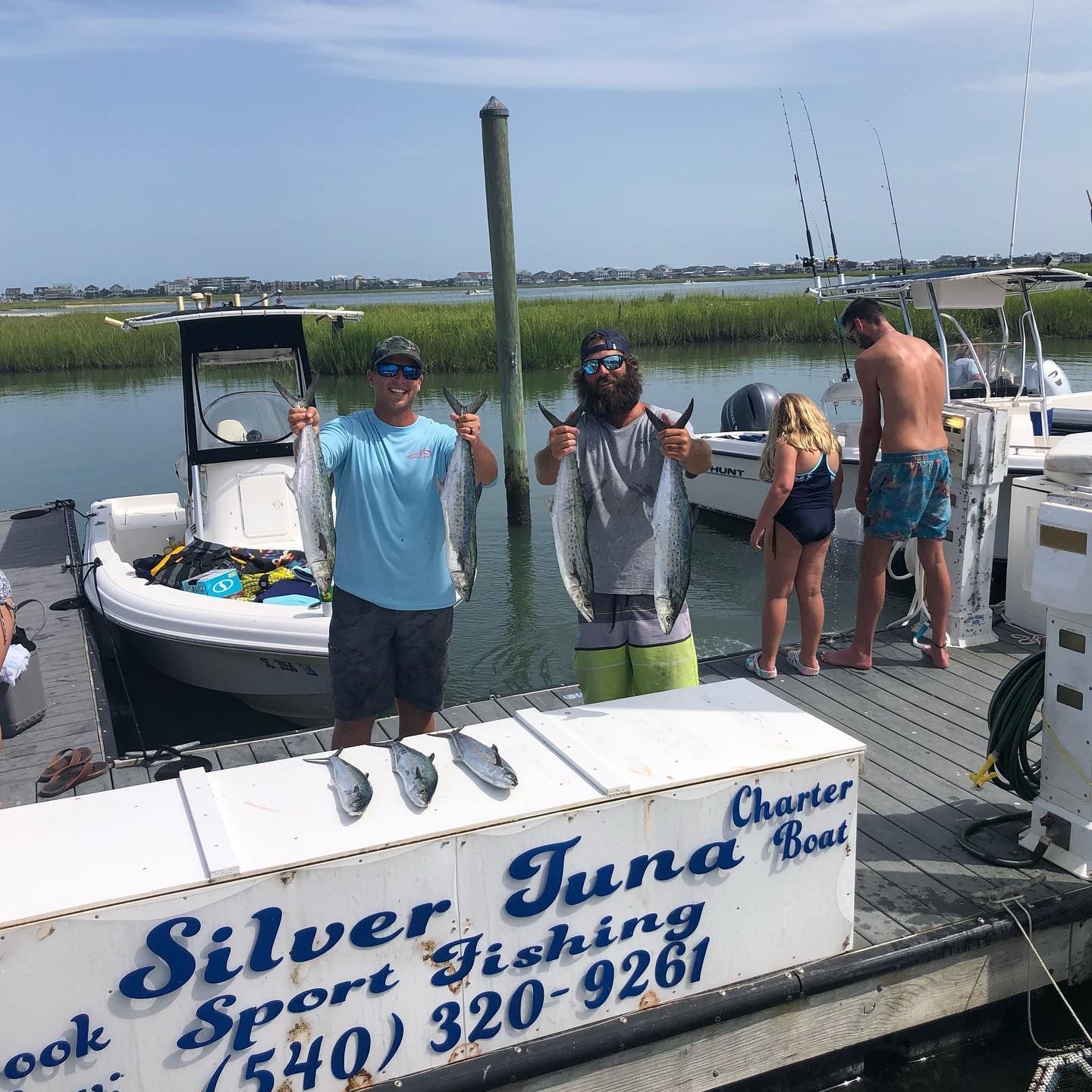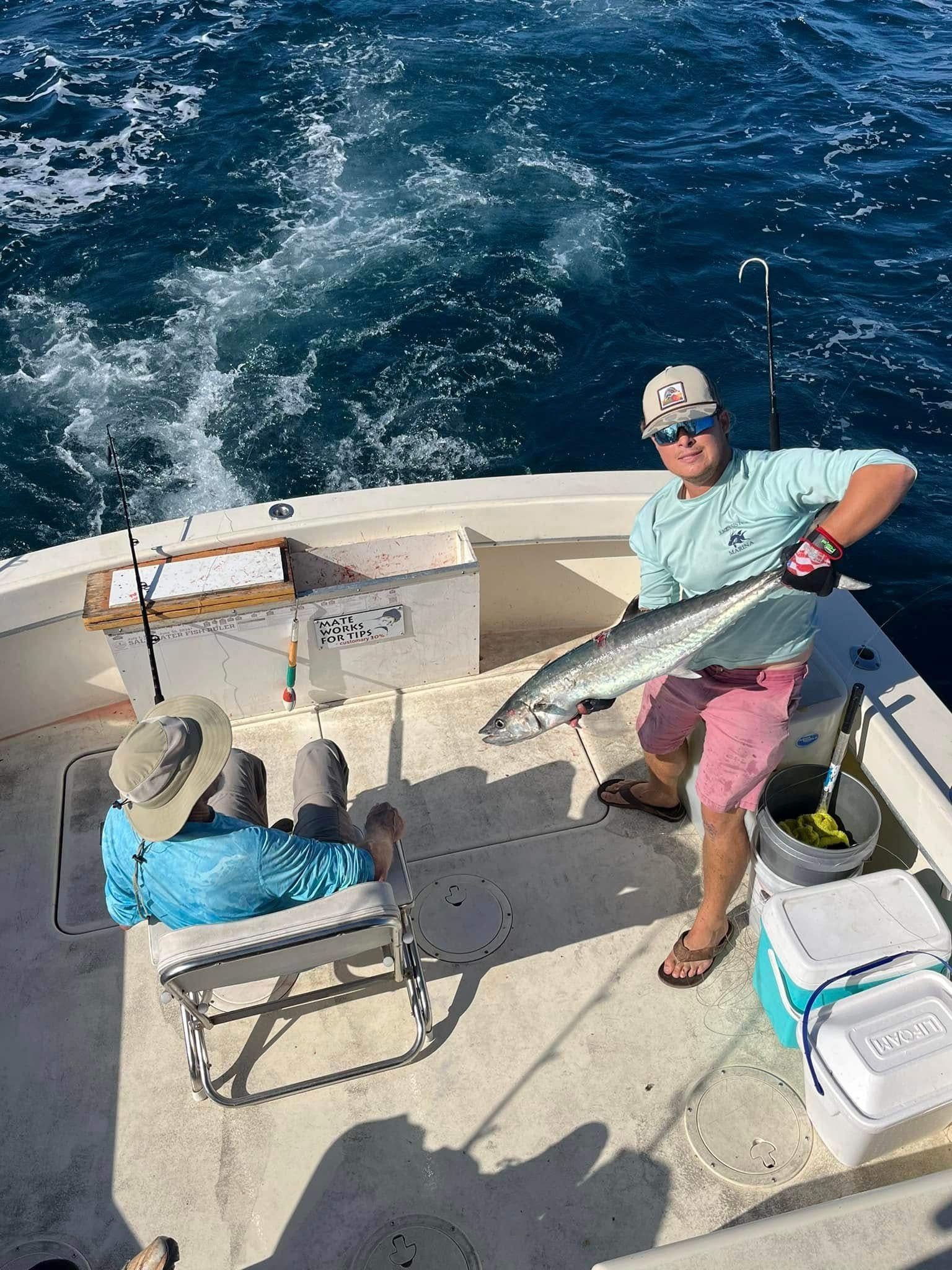
Georgetown Fishing Charters for Winyah Bay and Nearshore Waters
How Does Winyah Bay's Estuary System Affect Fishing Conditions Near Georgetown?
When dealing with fishing near Georgetown, SC, the defining feature is Winyah Bay — one of the largest estuaries on the East Coast, where the Black River, Pee Dee River, and Waccamaw River converge before flowing into the Atlantic. That freshwater-saltwater mixing zone produces exceptional inshore conditions for redfish and flounder, with nutrient levels that sustain baitfish populations well into the cooler months when other areas along the Grand Strand have seen activity drop off.
Silver Tuna Sport Fishing operates from Murrells Inlet, positioned between Georgetown to the south and Myrtle Beach to the north — ideally placed to serve Georgetown-area guests heading north for a day on the water. The nearshore Atlantic structure accessible from Murrells Inlet — live-bottom ledges in 20 to 50 feet of water — offers Georgetown anglers access to king mackerel and cobia that the Winyah Bay system itself doesn't typically hold.
Georgetown visitors looking for a full-day charter find the 8-hour option the best fit — enough time to fish inshore structure during the morning low tide and move to nearshore ledges as the wind lays down through midday, then return with catches from two distinct environments on a single trip.
How Inshore Charters Adapt to Georgetown-Area Tidal Patterns
The Winyah Bay system produces a pronounced tidal range — between four and six feet — that moves large volumes of water through the inlet twice daily. Timing a charter to these cycles determines whether redfish are pinned to the edges of marsh grass or scattered across open flats. Our captain's approach accounts for where Georgetown-area fish position based on tide stage, not just where they were during the last trip.
- Tide-based departure scheduling to position the boat during active feeding windows rather than at a convenient fixed time
- Inshore structure selection adjusted for seasonal baitfish movement through the Winyah Bay corridor and Georgetown waterways
- Nearshore access to live-bottom ledges off the Georgetown coast that hold king mackerel and Spanish mackerel from late spring through October
- Air-conditioned cabin provides comfort on Georgetown-area summer days when temperatures reach the mid-90s before noon
- On-board bathroom and full tackle provision mean Georgetown guests don't have to plan the trip around on-water logistics
Georgetown-area fishing offers some of the richest inshore habitat on the South Carolina coast. Book a charter and let a captain who knows the structure put you on the fish rather than guessing from the dock.
Why Georgetown Anglers Make the Trip to Murrells Inlet
Georgetown sits at the southern edge of the Grand Strand's active fishing corridor, and anglers based there often find that the short drive north to Murrells Inlet unlocks nearshore structure and species variety that Georgetown's immediate waters don't consistently offer. The tradeoff is worth it: a boat range that reaches both inshore redfish flats and open-water king mackerel grounds in the same trip.
- When inshore conditions are slack, nearshore ledges off the Murrells Inlet approach provide a productive alternative without scrapping the trip
- If only targeting redfish and flounder, the marsh system between Georgetown and Murrells Inlet holds fish across a long tidal window
- Depending on season — spring cobia migration versus fall king mackerel run — the target species and tactics shift significantly, and our captain adjusts accordingly
- Family groups from Georgetown benefit from the air-conditioned cabin and bathroom on longer runs during summer heat
- Georgetown guests choosing the full-day option access the most varied fishing terrain: tidal creek inshore in the morning, open Atlantic structure in the afternoon
Georgetown anglers who've fished the Winyah Bay system for years often describe the first nearshore trip with Silver Tuna as a different category of experience. Contact us to reserve your date and add that difference to your next Georgetown fishing trip.